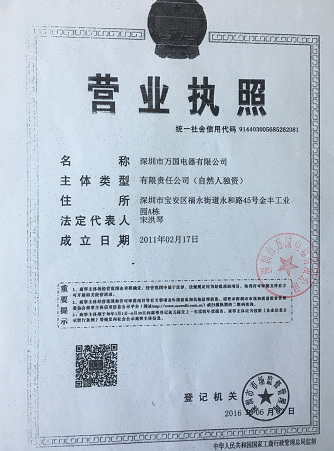
Welcome to visit the official website of Shenzhen Wanguo Electric Co., Ltd!


17 years focus on commercial display field
LED LCD R & D production sales service
Products
LG 26-inch LCD screen
Category:
Keyword: LG 26-inch LCD screen
- Description
- Product parameters
- Recommended similar products
-
- Commodity name: LG 26-inch LCD screen
- Commodity ID: 1338817399918055424
Recommend products
86-inch AI Holographic Pod | Universal Immersive Interaction Solution | Enterprise-Level Commercial Equipment
Technical Parameters Ultra-Large Visual Field: 86-inch holographic display with 160° horizontal field of view, 120° vertical field of view, supporting 4K real-time rendering. Millisecond-Level Response: AI algorithm latency <5ms, gesture/voice command recognition accuracy 99.3%. Multi-Terminal Collaboration: Supports seamless screen casting for PC/mobile/VR devices, compatible with Unity/Unreal engines. AI Function Highlights Intelligent Environmental Adaptation: Built-in light sensor automatically adjusts brightness and contrast to suit the environment. Upgraded Human-Computer Interaction: Supports 20 types of gesture recognition, real-time translation of 6 languages, and emotion feedback analysis. Enhanced Data Security: Edge-side AI chip encryption, compliant with GDPR/Grade Protection 2.0 standards. Scenario-Based Solutions Enterprise Exhibition Hall: Restores cultural relic details and simulates mechanical disassembly, increasing customer interaction rate by 200%. Medical Training: 1:1 holographic anatomical model supports multi-person collaborative labeling, saving 90% of consumable costs. Remote Conference: Generates 3D virtual avatars with limb movement synchronization accuracy of ±0.5mm.
See more +
Digital Human Holographic Pod + 86-inch Holographic Pod = Intelligent Voice Interaction & Virtual Human Synthesis
86-inch Holographic Pod AI Digital Human Device Unaided-eye 3D Holographic Pod
See more +
65-inch Double-sided Display Advertising Machine: Leading the New Trend of Advertising
75-inch holographic cabin transparent cabinet AI intelligent voice docking software system
75-inch cylindrical holographic display AI holographic transparent cabin
The AI holographic transparent cabin attracted a large number of viewers to stop and experience it. The virtual person presented on the transparent screen in a three-dimensional form danced gracefully, as if in a real world. The AI holographic transparent cabin is an innovative application combining artificial intelligence and holographic projection technology. Utilizing computer graphics and artificial intelligence algorithms, the digital person is presented in a realistic image in the holographic projection device. "Currently, the product has been applied to banks, subways, enterprise exhibition halls, and shopping mall advertising interactions."
See more +
OLED transparent screen, 55-inch wall-mounted OLED transparent screen
An OLED screen is a display manufactured using organic light-emitting diode (OLED) technology. Compared to traditional liquid crystal displays, OLED screens have many advantages. First, OLED screens can achieve higher contrast and a wider color gamut, making images clearer, more delicate, and more realistic. Their unique self-emissive properties allow each pixel to be independent, eliminating the need for a backlight, thus achieving true deep blacks and high brightness. In addition, OLED screens have faster response speeds, allowing for smoother dynamic images, suitable for watching videos and playing games. Secondly, OLED screens are thinner, lighter, and more flexible. Because OLED screens do not require a backlight and can use flexible substrate materials, thinner, lighter, and more flexible displays can be manufactured. This allows OLED screens to be used in various devices, such as smartphones, tablets, and wearable devices, and enables innovative designs such as curved screens and foldable screens. Furthermore, OLED screens also have lower power consumption and better energy efficiency. Because each pixel can emit light independently, OLED screens can dynamically adjust brightness according to the displayed content, thereby reducing power consumption. When displaying black or dark content, the screen can completely turn off the corresponding pixels, further saving energy. This allows devices to extend battery life, providing longer usage time. In summary, with its excellent image quality, thin and light weight, and low power consumption, the OLED screen has become an important development direction of modern display technology. It brings users a better visual experience and promotes the innovation and development of electronic devices.
See more +
Holographic pods, holographic cabinets, transparent screens, AI human-computer interaction, the future exhibition halls and pavilions of digital humans, a new experience
55-inch double-sided advertising machine, Android system, double-sided display can be the same or different, vertical advertising machine
55EG7 Double-sided Advertising Machine WiFi Android Synchronous and Asynchronous Display
Complete Categories
Save worry and effort, buy all at one stop.
One-to-one customer service
Selection inquiry, fast response
Delivery Guarantee
Multi-warehouse straight hair, worry-free delivery period
Genuine Supply
genuine goods security, integrity services
National Hotline:13430872800
Liu Guohua (Chairman):13430872800
Telephone:86-755-29929990
E-mail:wanguotv@126.com
Copyright©2025 Shenzhen Wanguo Electric Co., Ltd. All rights reserved.